Skip to content
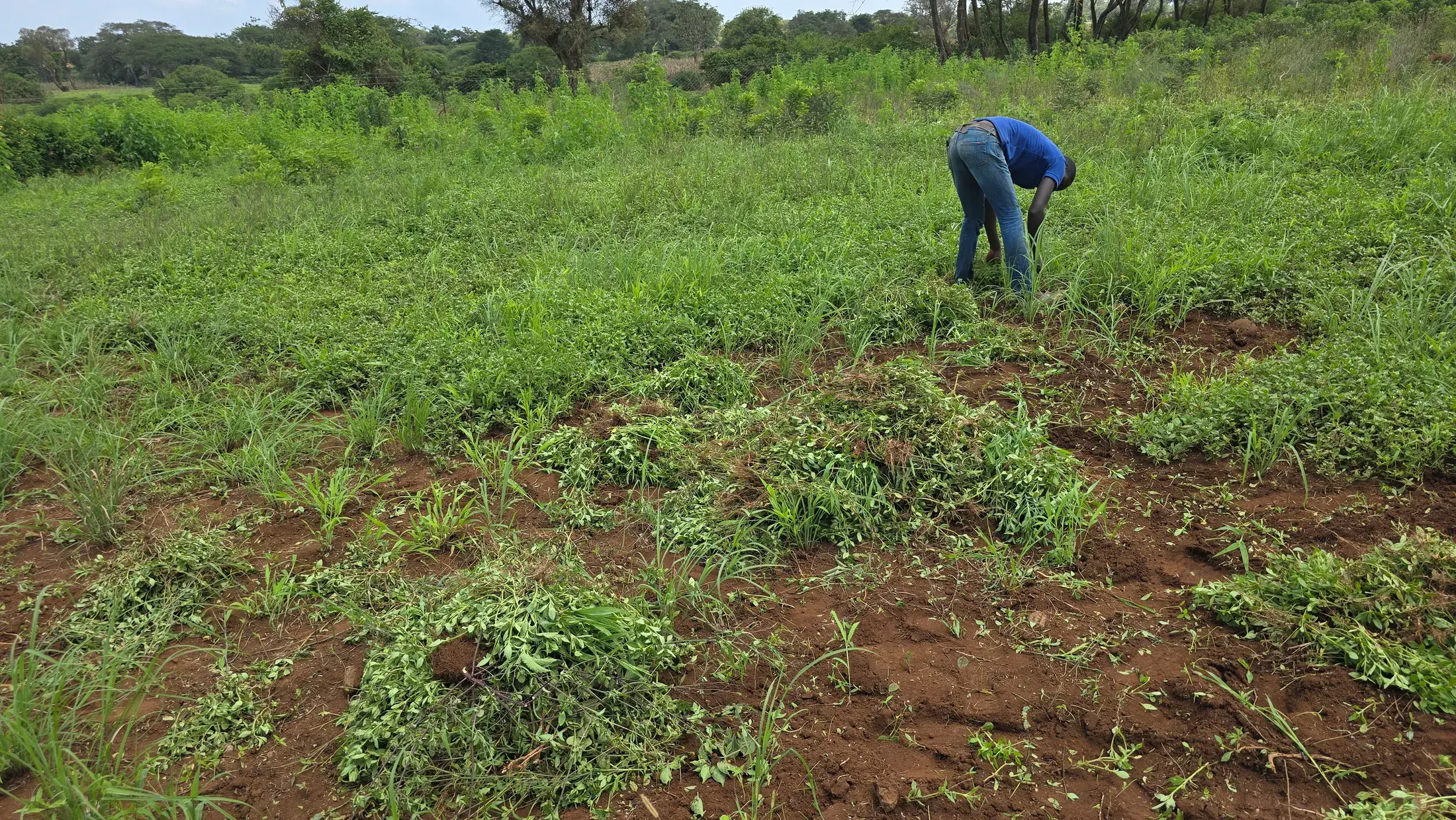
A stand of Boma Rhodes grass being hand weeded on red soil at Moran Farms

Boma Rhodes · Moran Farms, Illasit

Hay is only as good as the day it was cut

Boma Rhodes is the hay grass most of Kenya already knows. What separates a good bale from an expensive one is almost entirely a question of timing, and that is the part we take seriously.

Why we grow it

The grass that gets you through

Boma Rhodes establishes readily, tolerates a dry spell once its roots are down, and bales into hay that stores for months without going musty. For a livestock keeper in Kajiado that combination is worth more than a higher protein figure on paper.

It also does something Juncao cannot. Juncao is a cut and carry crop, green and heavy, best fed fresh or ensiled. Rhodes dries down into something you can stack in a shed in April and still feed in October.

The two are not competitors. Rhodes is the store, Juncao is the engine, and the silage pit sits between them.

  • 9 to 12% crude protein

    At early flowering, on a dry matter basis.

  • Stores through the dry season

    Baled dry and kept covered, it holds its quality for months.

  • Bulk without the bulk cost

    The cheapest way to keep rumens full when the grazing is finished.

The thing that matters

Cut at early flowering, not when you get round to it

Rhodes grass loses protein fast once it heads out. The bale looks the same, weighs the same and costs the same to make. It just stops feeding the animal.

Too early

High protein

Lush and leafy, but the yield is not there yet and it is difficult to dry down properly. You end up with very little hay for a lot of work.

Early flowering

9 to 12%

Around 50% heading. Enough bulk to be worth cutting and the leaf still carrying its protein. This is the window, and it is narrower than people expect.

Too late

Falls away

Stemmy, coarse and low in protein. The animals sort through it and leave a third of it on the floor. Most disappointing hay in Kenya is simply hay cut late.

Every trainee on this farm learns that difference by weighing it, not by being told it. It is the single most useful thing anyone can know about hay.

Growing it yourself

What we tell anyone putting in a Rhodes plot

We grow Boma Rhodes here, so this is what we have learned on our own ground rather than what a leaflet says.

  1. Prepare a fine seedbed

    Rhodes seed is small and light. It needs a firm, fine bed and shallow cover, and it will not push through clods or a crust.

  2. Sow shallow

    Broadcast or drill very shallow and roll or tread it in. Seed buried too deep simply does not come up, and this is the commonest reason a stand fails.

  3. Keep it clean early

    The first two months decide the stand. Once Rhodes has tillered and closed canopy it holds its own, but before that weeds will take it.

  4. Feed it after every cut

    Each bale that leaves the field takes nutrients with it. Top dress after cutting or the stand thins and the yield drops season on season.

  5. Cut, wilt, bale dry

    Bale damp and you get mould and heating in the stack. Dry it properly, bale it dry, store it covered and off the ground.

  6. Rest the stand

    Let it recover fully between cuts. A stand cut too often, too short, will run out of vigour long before it should.

Rhodes fills the stomach and Juncao and the legumes bring the protein. If you are planning a fodder block from scratch, talk to us about the mix before you buy anything.

Hay and advice

Tell us what you are feeding and we will tell you what you need

How many animals, what they are producing, and how long your dry season runs. From that we can tell you how much hay to plan for and whether your ration needs something alongside it.

  • Boma Rhodes hay, cut at early flowering
  • Honest advice on what your ration is missing
  • Juncao planting nodes if you would rather grow your own
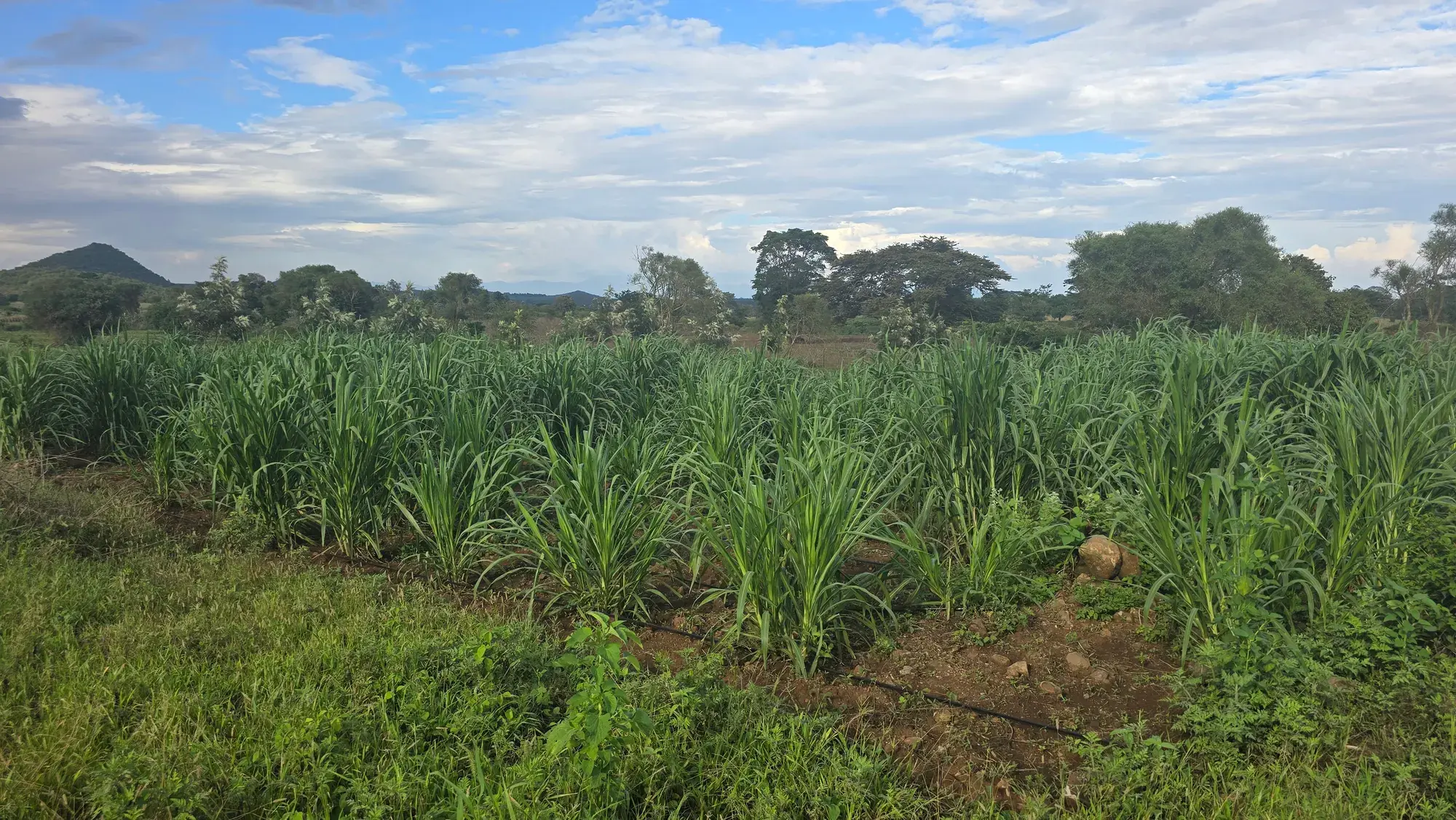
Fodder blocks at Moran Farms stretching towards the hills