Skip to content
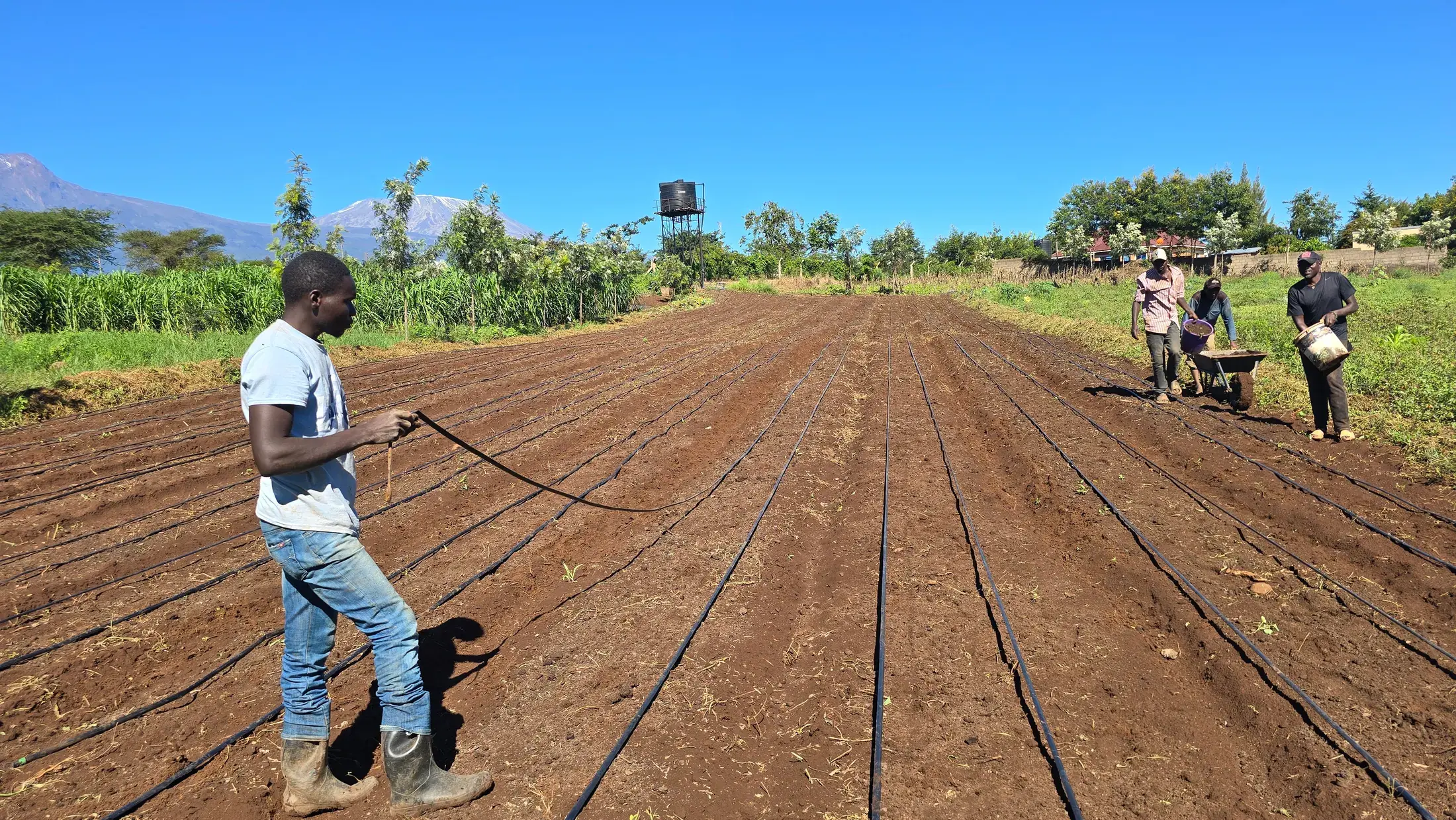
A young farmer laying drip irrigation lines across newly prepared beds with Kilimanjaro behind

Partner with us

Fund the field, not the brochure

Moran Farms is a revenue generating farm in Kajiado South doing climate smart agriculture, youth livelihoods and women's economic empowerment as its day job. Partnership is what lets us scale the part that cannot pay for itself.

The case

A delivery partner that already exists

Kajiado South sits in one of the parts of Kenya where the climate is changing fastest. Rainfall is less reliable than it was a generation ago, dry spells run longer, and livestock keepers are losing animals for one reason above all others: there is nothing to feed them when the grass goes.

At the same time the district is full of young people who finished school, went to Nairobi for work that did not exist, and came home to land they have never been taught to use. The cost of that idleness is visible in every trading centre.

Moran Farms sits exactly where those two problems meet. We grow drought tolerant perennial fodder, we irrigate by drip rather than by flood, and we teach young people to do both while paying them to learn.

We are not asking a funder to start something. We are asking a funder to widen a road that is already open, on a farm with a wage bill, a customer base and national recognition for the work.

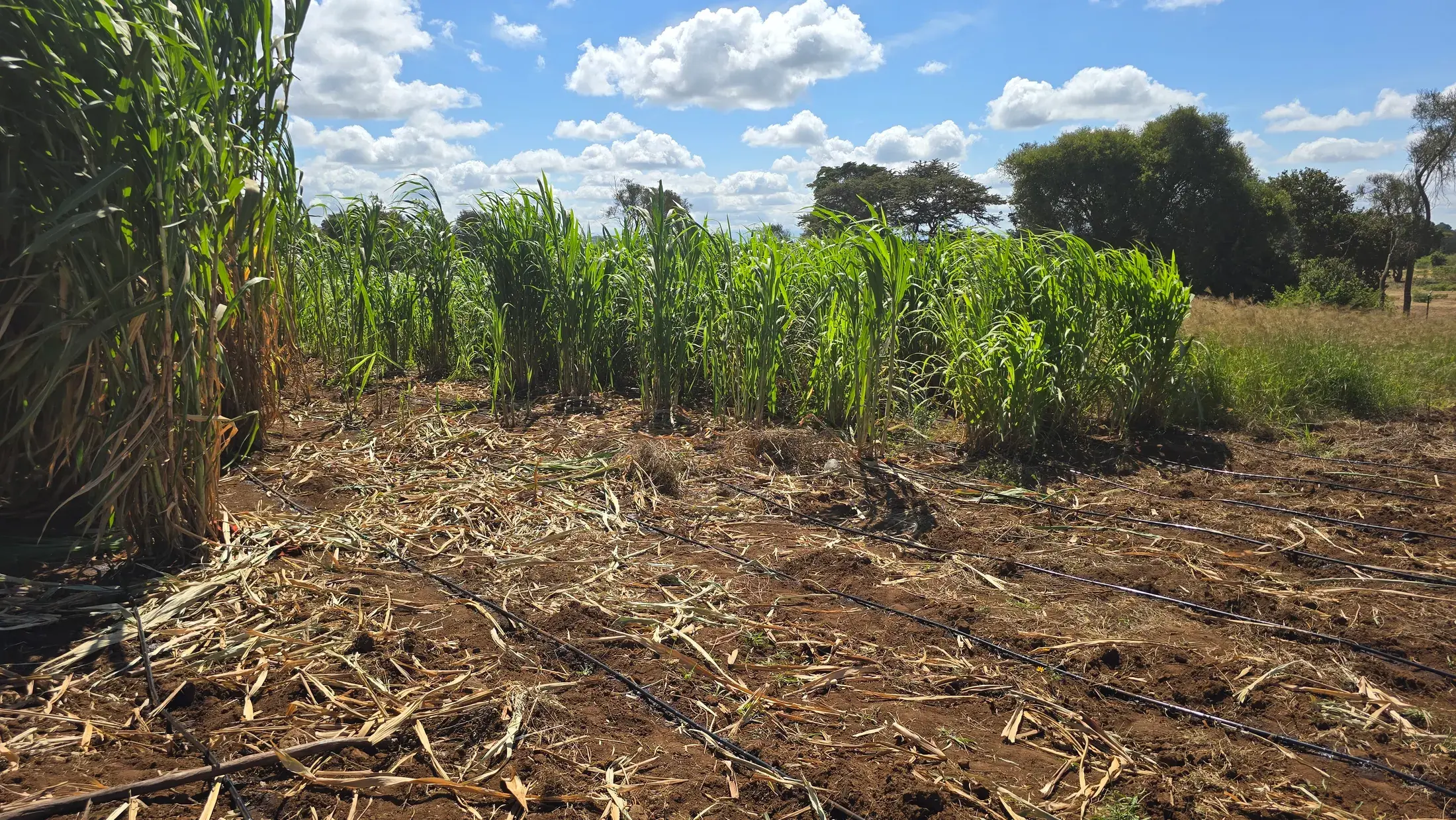
A block of Juncao fodder grass, part cut and already regrowing from the stools

Agriculture and Food Safety

Winners at the ETA Awards 2026, judged on production and on who is trained by it.

Where we work

Four areas, one farm

These are not separate programmes competing for attention. They are the same piece of land, doing all four things at once because on a smallholder farm they are inseparable.

Climate action

Perennial deep rooted fodder that holds soil and survives dry spells. Drip irrigation instead of flood. Legume cover crops that fix nitrogen and cut fertiliser dependence. Conserved feed so livestock keepers stop destocking every drought.

  • Drought tolerant perennial fodder, planted once and cut for years
  • Drip irrigation across the horticulture blocks
  • Nitrogen fixing legumes in rotation and between the fodder rows
  • Silage as a buffer against dry season feed collapse
Youth livelihoods

Practical agricultural training for young people who own or can access land but have never been shown how to use it, delivered in their own district so that nobody has to migrate to learn.

  • Training on a commercial farm, not a demonstration plot
  • Paid work while learning, so attendance costs nothing
  • A full crop cycle, from land preparation to selling the harvest
  • A route into fodder as a business, not just as subsistence

Women and AGYW

Adolescent girls and young women are usually counted last in rural agriculture, paid least, and given the heaviest tasks. We already pay equally. With a partner we can go further and build a deliberate pathway into agribusiness.

  • Equal daily wage for equal work, paid on time
  • Women in skilled roles, not only in casual labour
  • A planned intake route for adolescent girls and young women
  • Income that reaches households directly

Food and feed security

Six crops in the ground and a fodder enterprise supplying planting material to farmers in other counties. Every node that leaves here becomes a feed bank on somebody else's land.

  • Maize, beans, sukuma wiki and cabbages for food
  • Juncao and Boma Rhodes for feed
  • Planting material distributed countrywide
  • Agronomy support so the crop survives after it arrives

What partnership funds

The things a farm cannot pay for out of sales

Moran Farms covers its own running costs. What it cannot cover is the cost of teaching people for free, because a trainee is not yet a productive worker and we refuse to pretend otherwise.

The training programme

Running structured cohorts through a full crop cycle, with a stipend so that attending does not cost a young person their income. This is the fastest thing funding changes.

Water and irrigation

Extending drip coverage and storage so more of the farm can produce through the dry season, and so trainees learn on a system that actually holds up.

Fodder multiplication

More land under Juncao and Boma Rhodes means more planting material reaching farmers in drought affected counties, and more revenue back into the training.

Facilities

Somewhere for a cohort to sit, store tools, process and keep records. Modest infrastructure, and the difference between hosting ten people and hosting fifty.

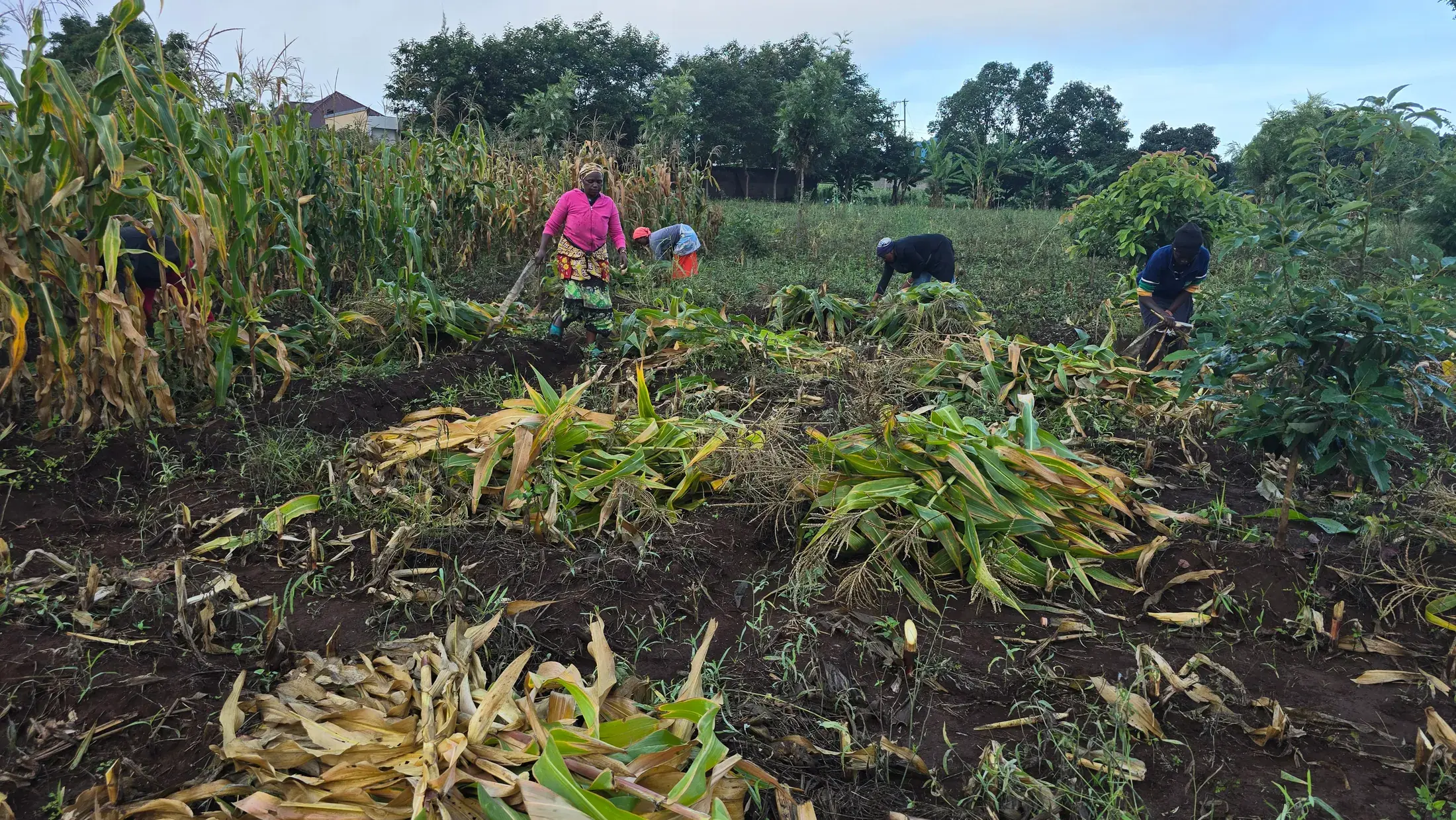
Women harvesting maize at Moran Farms, cutting stalks and stacking them in the field

How we work with partners

Plainly, and with the books open

  • We report what happened

    Including the parts that did not work. A partner who only ever hears good news is not being told the truth.

  • We do not build a parallel organisation

    Funding goes into the farm and the training, not into a new structure that collapses when the grant ends.

  • We are already accountable

    Moran Farms operates as a social enterprise of Digital Moran CBO, with the governance that comes with it.

  • We keep earning

    Sales continue alongside any partnership, so the work has a floor under it when the funding cycle closes.

Moran Farms is a social enterprise of Digital Moran CBO, which works on rural youth employment through digital skills. The two programmes share a community, a governance structure and a conviction.

Come and walk the farm

We would rather show you the blocks, the drip lines and the people on the payroll than send you a deck. We will get you whatever documentation your process needs.

All our contact details