Skip to content
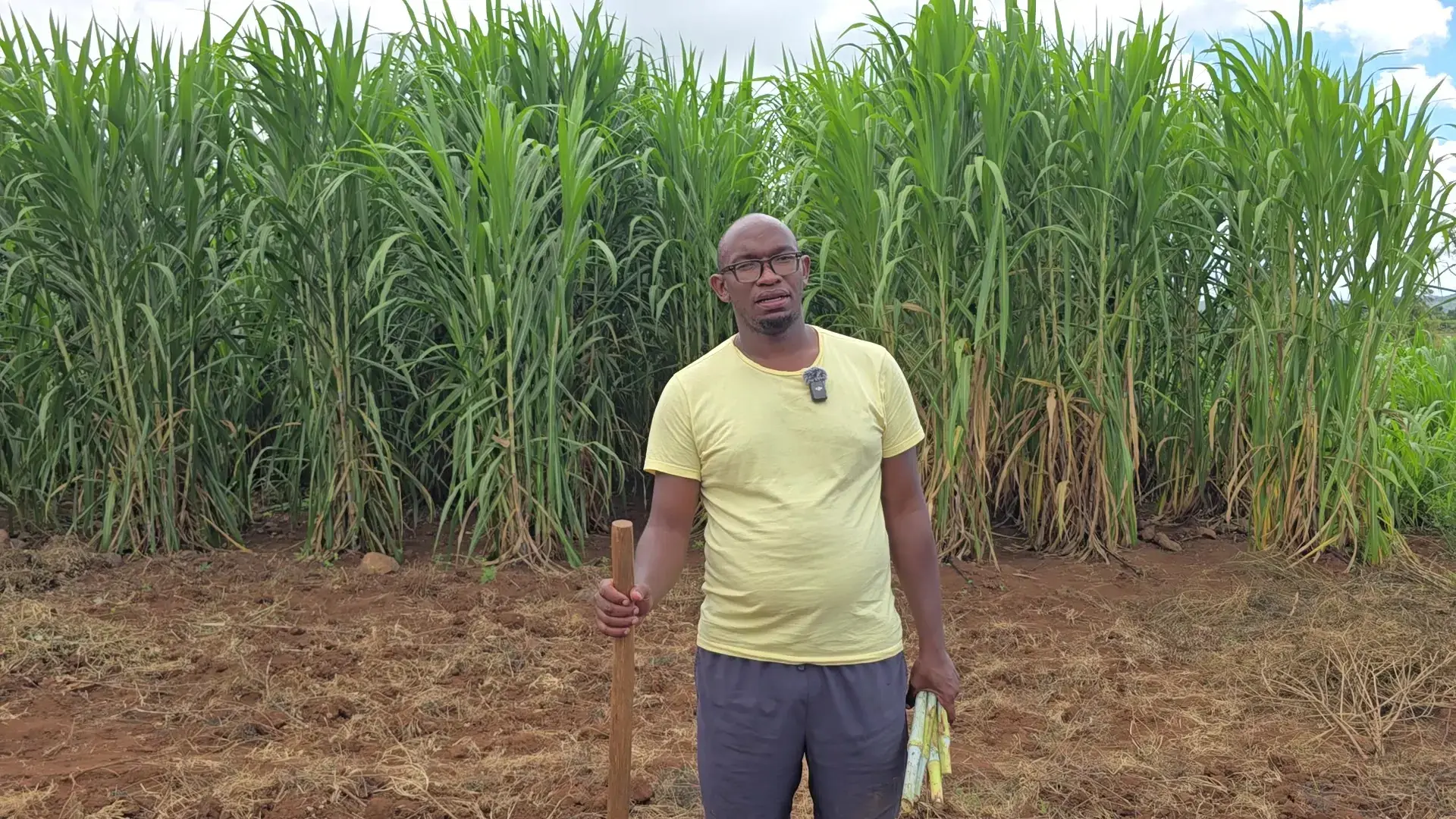
Siloma Stephen standing in front of a wall of mature Juncao fodder grass, the canes towering well above his head

Juncao fodder cuttings

Plant it once. Cut it for years.

Juncao reaches up to twenty feet and carries 14 to 18% protein. KES 20 a cutting, KES 17 from 1,000 up, delivered anywhere in Kenya.

What it is

A grass bred to do more than feed cattle

Juncao came out of China in the 1980s, grown so that mushrooms could be raised on grass instead of on felled hardwood. What farmers across East Africa discovered afterwards is that the same grass is an outstanding fodder crop.

It grows tall and fast, regrows hard after every cut, tolerates heat and a wide range of soils, and holds its leaf. One well established stand keeps producing for years before it needs replanting.

For a dairy farmer that means a standing feed bank on your own land, instead of a monthly trip to buy hay at whatever the dry season has done to the price.

  • Up to twenty feet tall

    Enormous bulk per cut, and it comes back after every one.

  • 14 to 18% crude protein

    At a 60 to 75 day cutting interval, on a dry matter basis.

  • Plant once, harvest for years

    An established stand produces for several seasons.

  • Travels well

    Cuttings are hardy enough to reach any county in Kenya alive.

Prices and quantities

What it costs and how many you need

We are at Illasit, near Oloitokitok in Kajiado South, on the slopes of Mount Kilimanjaro. We deliver countrywide.

Price per cutting

KES 20 a cutting

Minimum order 100 cuttings.

KES 17 a cutting

From 1,000 cuttings and above.

Order on WhatsApp
  • Quarter acre550 cuttings
  • Half acre1,100 cuttings
  • One acre2,200 cuttings

The arithmetic

We plant 4 ft between cuttings and 5 ft between rows, so each plant takes about 20 sq ft. An acre is 43,560 sq ft, which works out at roughly 2,200 cuttings to the acre. Tighten or widen the spacing and the number moves with it.

Countrywide delivery

Tell us your nearest town and we will quote the delivery with your order. Call or WhatsApp 0722 973 964.

How it grows

Three stages, and what each one is good for

Knowing where your stand is in the cycle is most of the skill. Cut at the right stage and you get feed. Cut late and you get bulk with the value gone out of it.

  1. Early maturity

    3 to 4 months

    The stand is rooted and climbing. First cut comes off around here on a well watered plot.

  2. Medium maturity

    5 to 6 months

    Full canopy and heavy bulk, with the leaf still carrying its protein. The working window for cut and carry.

  3. Peak maturity

    7 to 8 months

    Maximum height and tonnage. Leave it standing past this and you gain bulk while the feed value falls.

Feed value

In plain numbers

If you are buying fodder you deserve figures, not adjectives. These are the crude protein ranges we work to, on a dry matter basis, and the stage each crop should be cut at to hit them.

Typical crude protein content and best cutting stage for each fodder crop grown at Moran Farms
CropCrude proteinCut it at
Juncao fodder grass14 to 18%60 to 75 days after the last cut
Desmodium (green leaf)16 to 23%Before flowering
Boma Rhodes (hay)9 to 12%Early flowering, around 50% heading
Maize silage7 to 9%Half to two thirds milk line

These are ranges for well managed stands, not a laboratory analysis of any particular consignment. Real figures move with your soil, rainfall and cutting interval.

Why farmers switch

Everything napier promised, without the disease

Napier built Kenyan dairy. It is also why a lot of farmers now have half empty fodder plots.

Juncao fodder grass compared with napier grass
 JuncaoNapier
DiseaseNot affected by napier head smut or napier stunt disease, the two problems that have wiped out napier plots across Kenya.Head smut and stunt disease have destroyed established plots in many counties.
RegrowthVigorous regrowth after each cut. The stand thickens rather than thins.Regrowth weakens over time, especially once disease is present.
DroughtHolds up well through heat and a dry spell once the root system is established.Suffers quickly and takes longer to recover.
UsesFresh chop, silage, hay, and a substrate for mushroom growing.Mainly fresh chop and silage.

What you receive

Cuttings, not promises
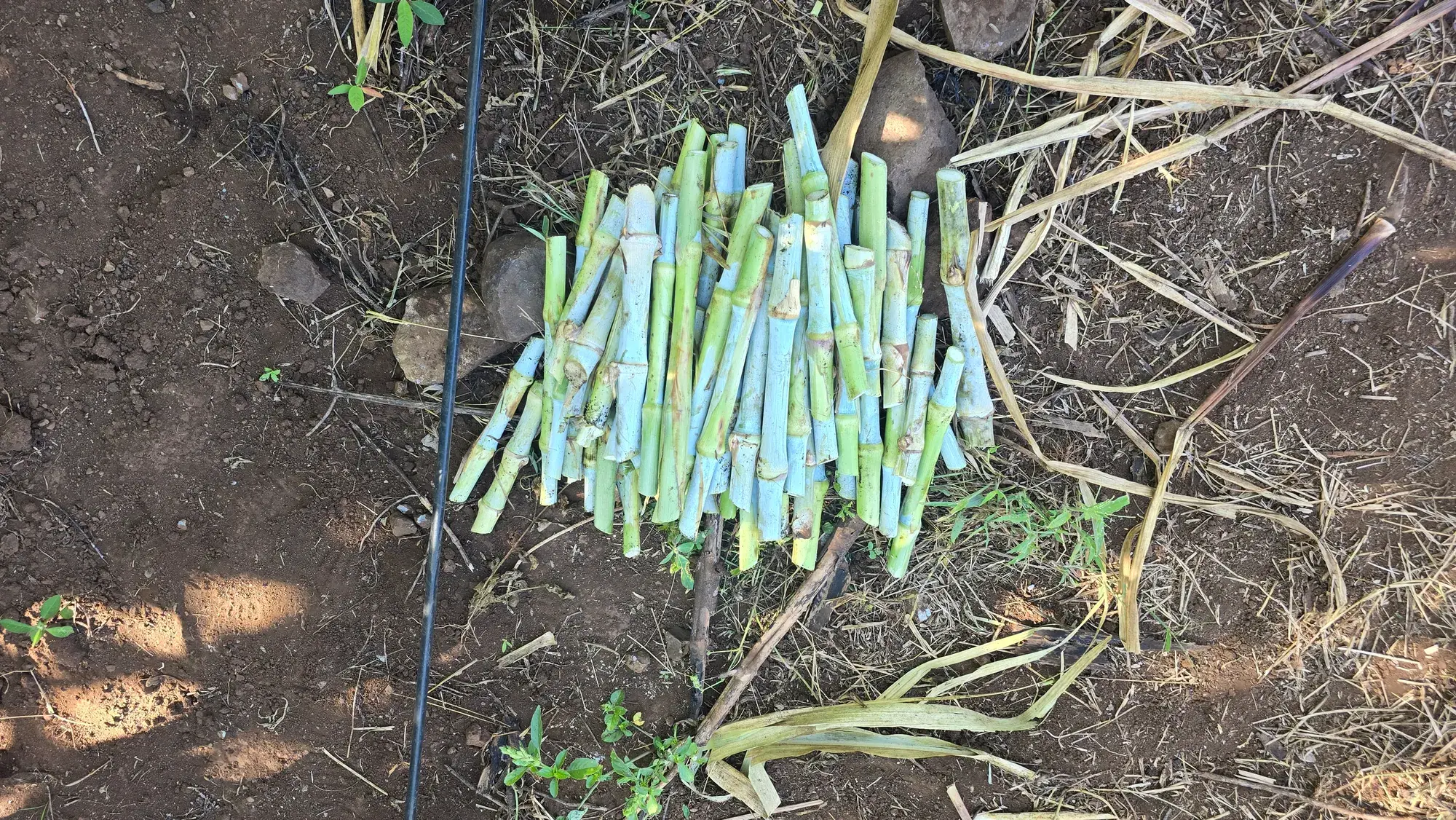
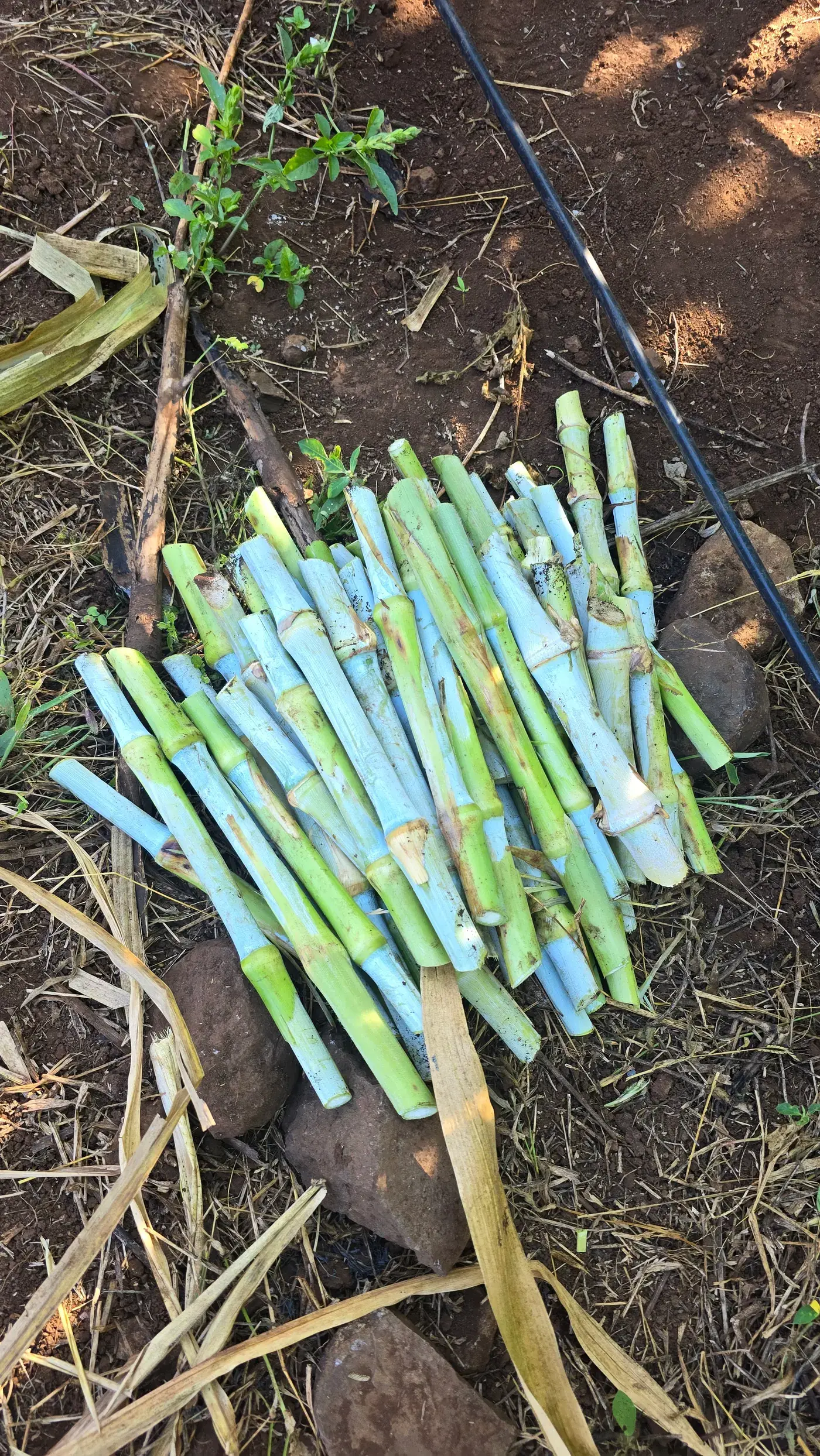
A cutting is a section of mature Juncao cane carrying at least one live bud. Put it in moist soil and that bud becomes a plant. What matters is that the cane was mature enough, cut cleanly, and still fresh when it reaches you.

A bundle of freshly cut Juncao cuttings laid out on the soil beside a drip line
  • Cut from mature, healthy canes on our own plantation
  • Harvested the morning your order travels, not stockpiled
  • Every cutting carries at least one viable bud
  • Packed to breathe, so they do not heat up in transit
  • Planting guidance sent with every order
  • Our number if anything goes wrong after it arrives
Close view of cut Juncao cuttings stacked together, showing the buds at each joint

How to plant

What we send out with every order

None of this is complicated. Most failures come from planting too deep, letting the plot dry out in week one, or losing it to weeds.

  1. Prepare the land

    Plough and harrow to a fine tilth and clear perennial weeds. Juncao is not fussy about soil type but it will not fight couch grass for you.

  2. Mark out 4 ft by 5 ft

    Five feet between rows and four feet between cuttings along the row. If you are irrigating, run the drip line before you plant.

  3. Lay the cutting

    Flat or at a slight angle in a furrow, covered with 5 to 10 cm of soil. The bud needs moisture and warmth, not depth. Water immediately.

  4. Keep it clean and fed

    Weed hard for the first two months while the stand closes canopy. Top dress after establishment and again after each cut.

  5. First cut

    Three to four months after planting, once the stand is well rooted. Cut about 10 to 15 cm above the ground so the stools regrow strongly.

  6. Then every 60 to 75 days

    That interval is the sweet spot between tonnage and protein. Let it stand much longer and the feed value falls out of it.

Watch it done

Planting Juncao, step by step

Filmed on the farm at Illasit. If you have bought cuttings from us, this is the video that goes out with your order.

Any trouble after planting, call or WhatsApp 0722 973 964.

Between the drip lines

We plant desmodium in the alleys
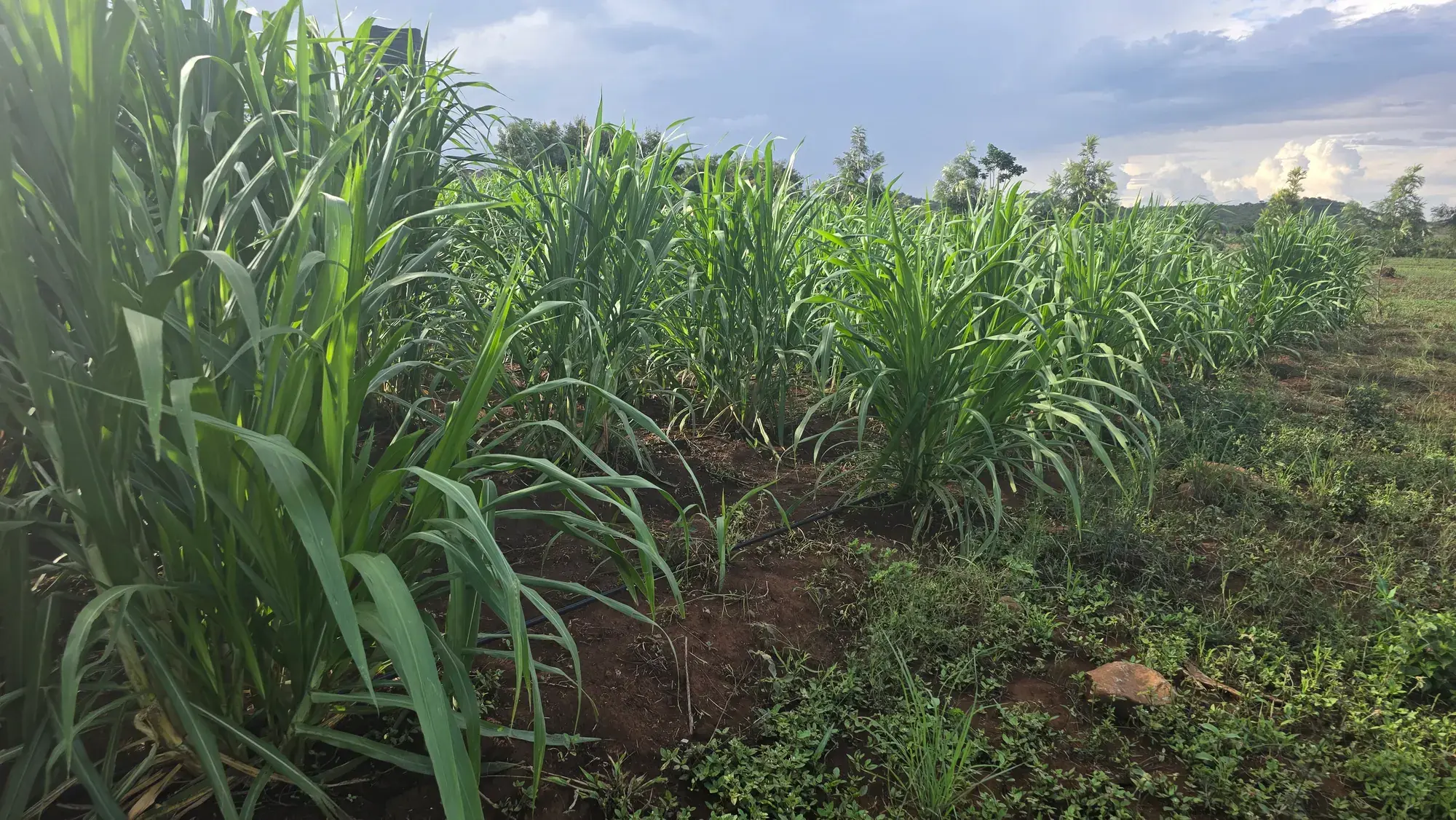
A Juncao block leaves space between the rows, and bare space is a weed problem waiting to happen. We run desmodium down those alleys instead, along the drip lines.

Desmodium is a creeping legume. It smothers weeds, shades the soil so the drip water stays where it is put, and fixes its own nitrogen, which the Juncao beside it takes advantage of.

Cut before flowering it runs 16 to 23% crude protein. Juncao brings the bulk, desmodium brings the protein, and together they make a ration that stands up on its own.

Young Juncao rows with a legume cover crop growing in the alleys between them

Countrywide delivery

We ship to any county in Kenya

Illasit is a long way from most places and that has never stopped an order. Cuttings are cut the morning they travel and packed to breathe so they arrive alive.

  1. Tell us what you need

    WhatsApp or call with your acreage, or a cutting count if you already know it, plus your nearest town.

  2. We quote, you confirm

    You get a total that includes packing and delivery. Nothing is cut until you have confirmed the order.

  3. Cut, bundled, dispatched

    We harvest on dispatch morning, bundle and label, and send by courier or parcel service with the waybill number.

  4. Plant, then call us

    Planting guidance goes out with the consignment. When the first shoots appear, or if they are slow, you have our number.

Before you order

Questions we get every week

How long do cuttings stay viable once they are cut?

Plant them as soon as they arrive. Within a day or two of delivery is best. Keep the bundles in shade, off hot metal and out of direct sun, and do not seal them in an airtight bag where they will sweat.

Will Juncao grow in my area?

It does well from the coast up to the mid altitude zones, in heat and in a wide range of soils, provided it gets water for establishment. Very cold, very high altitude areas are the main limitation. Tell us where you are and we will give you a straight answer.

Is this the same as napier?

No. They are both tall fodder grasses grown from cane cuttings, but Juncao is not affected by napier head smut or napier stunt disease, which is the single biggest reason farmers move across.

How soon can I start cutting?

Usually three to four months after planting for the first cut, then roughly every 60 to 75 days. Push the interval longer and you gain bulk while losing crude protein.

Can I plant during the dry season?

Only if you can irrigate. The bud needs consistently moist soil to sprout and the young plant needs water through the first weeks. If you are rain fed, plant at the start of the rains.

What if the cuttings do not sprout?

Call us. In most cases it comes down to planting depth, dry soil in the first week, or a consignment that sat too long before going in. We will work through it with you and, where the material was at fault, we will make it right.

Order Juncao cuttings

One message is all it takes

Tell us your acreage and your nearest town. We will come back with a total, a dispatch date and a planting sheet. No forms and no waiting on email.

Prefer email? [email protected]

Where your money goes

Cutting sales are one of the things that keep Digital Moran CBO running, the hub training rural young people for the digital economy. Buying fodder from us funds a classroom near the field it was cut in.

Read about Digital Moran